
Home / Treatments / Jaw Clicking & Locked Jaw
A plain-language guide to clicking jaws, jaw locking and jaw dislocation — what they mean, why they happen, and exactly what to do about them.
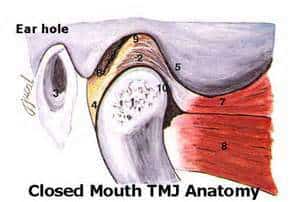
Inside the Jaw Joint
The clicking jaw
Jaw locking
A dislocated jaw
Sleep connection
Who to see
Stage one
A clicking, popping or snapping jaw is a sound — and sometimes a sensation — that comes from the temporomandibular joint (TMJ), just in front of each ear. It usually means something inside the joint isn’t moving smoothly.
Inside your jaw joint sits a small cushion called an articular disc — think of it as a shock absorber. Normally it glides smoothly with your jaw. Clicking happens when:
The click on opening is often the jaw finding the disc again; the click on closing is the disc slipping back.
Common contributing factors include:
Not always. Many people have jaw clicking with no pain at all, and for them it may need no treatment. However, you should see a TMJ specialist if:
Left unmanaged, a clicking jaw can sometimes progress to jaw locking.
Treatment depends on severity, but options include:
Tip
Sleeping on your back rather than your side reduces overnight pressure on the jaw joint, and often helps significantly.
Stage two
Jaw locking means your jaw gets temporarily stuck — either stuck open, so you can’t close it, or stuck closed, so you can’t open it fully. It’s a more advanced stage of disc displacement, and can be very frightening the first time it happens.
More common
The disc has slipped so far forward that the jaw can’t open properly — often only 25–30mm instead of the normal 40–50mm. The earlier clicking often disappears, which can seem like an improvement but actually means the jaw can no longer find the disc at all.
Less common
The jaw opens too wide and gets stuck. The condyle — the ball of the joint — has moved too far forward and cannot return by itself. This is rarer, but very distressing.
Jaw locking is usually the result of untreated or progressive disc displacement. The same risk factors for clicking apply — chronic teeth grinding, longstanding clicking that was never managed, trauma, arthritis causing the disc to adhere to surrounding tissue, or extreme mouth opening such as during a long dental procedure or a large yawn.
You may notice:
Treatment is staged, and early care gives the best results:
If your jaw is locked right now
Do not try to force it open. Relax your jaw muscles completely, apply warm compresses to both sides of your face, and gently move your jaw from side to side. If it doesn’t release within 30 minutes, seek urgent care from a dentist or emergency department.
The emergency
A dislocated jaw — mandibular dislocation — is when the lower jaw moves too far forward and the condyle gets stuck entirely outside the socket. Unlike locking, the jaw is held wide open and the person cannot close their mouth. This is a medical emergency.
Closed lock
You can’t open fully — the mouth stays mostly closed.
Open lock
You’re stuck wide open, but the ball of the joint is still near its normal position.
Dislocation
Stuck wide open and the jaw ball has popped completely out of its socket — entirely out of place.
A doctor or oral surgeon performs a procedure called manual reduction:
If the muscles are in severe spasm, sedation or a local anaesthetic into the joint may be needed first.
After reduction you’ll be advised to eat soft foods and avoid wide opening for several weeks. For repeated dislocations, longer-term options include:
If your jaw is dislocated
Go to an emergency department immediately. Do not attempt to force your jaw back yourself — this can cause serious injury. Keep your jaw relaxed, avoid eating or drinking, and get to a hospital or urgent dental centre as soon as possible.
General questions
Yes — significantly. Jaw problems and sleep are closely linked. Teeth grinding mostly occurs during sleep and directly damages the jaw joint over time. Conversely, a painful or poorly positioned jaw can cause disturbed sleep and frequent night waking.
There’s also a well-established connection between sleep apnoea and TMJ disorders — the two can worsen each other. If you snore, feel unrefreshed in the morning, or have been told you stop breathing at night, mention it to your TMJ specialist.
Your GP can refer you or point you in the right direction — or you can book directly with us.
Don't wait for it to worsen
Early treatment gives the best results. Book a consultation with Dr Manish Shah to assess your jaw and stop the problem progressing.
Suite 403, 307 Pitt St, Sydney NSW 2000