Home / Treatments / Bruxism

Bruxism — grinding & clenching.

Most teeth grinding and clenching happens at night while you sleep — which is why it’s classed as a sleep disorder. Left unchecked it wears down teeth, strains the jaw and triggers headaches. Here’s why it happens, and how we treat the cause.

image

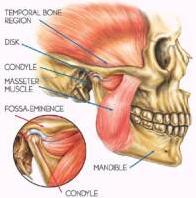
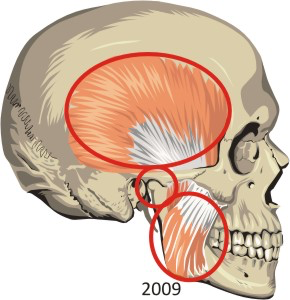
Muscles Loaded by Clenching

What is bruxism?

Clenching vs grinding

Why it happens

Signs & symptoms
Bruxism & headaches

How we diagnose

How we treat

The basics

What is bruxism?

Bruxism is characterised by repetitive jaw-muscle activity involving clenching or grinding of the teeth. It may occur during sleep or while awake, and its causes are often multifactorial. Because it generally happens at night — while you’re asleep and completely unaware of it — it has been classified as a sleep disorder rather than a simple habit.

The constant, unconscious force it places on your teeth, muscles and jaw joints is what causes the damage. Over time that shows up as worn or broken teeth, facial pain, headaches and jaw problems — together known as TMD (temporomandibular joint dysfunction).

image

The jaw joint affected by bruxism

Two distinct actions

Clenching vs grinding.

Bruxism covers two different movements. Many people do both — often without ever realising it.

Clenching

Tightly Clamping Teeth

Clamping your top and bottom teeth firmly together — most often the back teeth, though it happens with the front teeth too. This constant pressure loads the muscles and joints around the jaw, leading to headaches, earaches, jaw soreness and tooth damage.

Grinding

Sliding Teeth Side to Side

Sliding the teeth from side to side while asleep. It’s common among people who also clench, and it gradually wears the teeth down. Grinding can be loud enough to disturb a bed partner, and over time damages the jaw joint and muscles.

Understanding the cause

Why do people brux?

People clench, grind or both because of increased stimulation from the brain and spinal cord — the central nervous system. That heightened signal is usually driven by one or more of the following.

01

Chronic Pain

A painful nerve, an inflamed or compressed spinal disc, or an arthritic hip — ongoing pain anywhere in the body keeps the nervous system on high alert.

02

Compromised Airway

Struggling to breathe through a compromised airway — sleep apnoea, where breathing stops for ten seconds or longer, or other sleep disturbances.

03

Life's Anxieties

Divorce, work pressure, relationships and everyday stress all raise muscle tension and feed night-time clenching.

04

Nutritional Deficiency

When key nutrients sit below — or at the low end of — the normal range, the muscles and nervous system are more easily triggered.

In many people it’s a combination of two or more of these — which is why treating a single factor in isolation rarely resolves it.

Self-recognition

Signs & symptoms of bruxism.

You may have just one of these, or several. Recognising even a few is worth a conversation.

worn teeth tmj
01

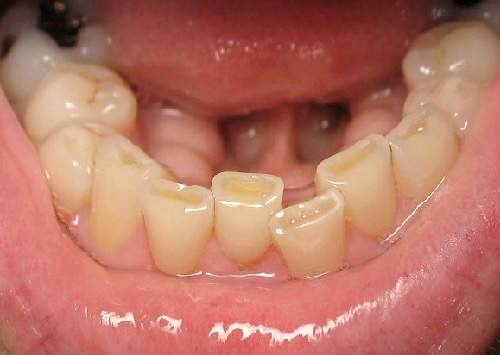
Tooth Wear

The enamel wears down until you see the second, darker layer of the tooth.

image
02

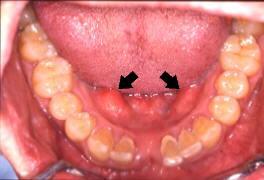
Tori

Bony bumps that develop on the inside of your lower jaw.
image
03

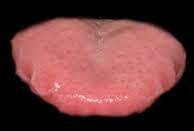
Tongue Scalloping

Wavy impressions of your teeth pressed into the sides of your tongue.
04

Broken or Fractured Teeth

Cracks, chips and fractures from the sheer force of clenching.

05

Jaw Shape Changes

A change in the angle of the jaw — usually only visible on an x-ray.
06

Jaw Joint Changes

Structural changes within the joint itself, seen only on a scan.
07

Facial or Tooth Pain

Aching across the face, jaw or individual teeth, often worst in the morning.
08

Headaches

Recurring headaches linked to overworked jaw and temple muscles.
09

Limited Jaw Opening

Difficulty opening fully, or a feeling the jaw is stiff or stuck.
10

Jaw Noises

Popping or clicking in the joint when you open and close.

The bigger picture

The head and face are the monitors of the body's health.

Your chewing muscles work in balance with the muscles at the front and back of your neck. Their tone and activity are set by signals from the brain and spinal cord. When pain, breathing dysfunction or anxiety raise that signal, you clench and grind — and over time it breaks down the toughest joint in the body.

Bruxism & headaches

Can grinding cause headaches?

Yes. Migraine, cluster, hypnic and morning tension headaches — in both adults and children — are related to sleep apnoea and disturbed sleep. When the muscles are overworked and the airway compromised, headaches follow.

Because bruxism is a subconscious activity, most people are completely unaware it’s happening. It also worsens when you sleep on your back — the same position that aggravates sleep apnoea.

image

Muscles that become tender during bruxism

65%

of patients with night-time bruxism also experience headaches.

3×

the biting force used by people who grind, compared with those who don’t.

Our process

How we diagnose bruxism.

Bruxism can be identified by a dentist through a careful examination — and, where the signs point to it, a sleep assessment.

01

Dental Examination

We look for the tell-tale signs — bony growths on the sides of the lower jaw, a scalloped tongue, worn-down teeth, and fractured or broken-down teeth.

02

Sleep Study

If there are signs and symptoms of a sleep disorder, a sleep study is warranted to determine whether disordered breathing is driving the grinding.

Our integrated approach

How we treat bruxism.

The basic principle is simple: treat the cause first, then protect the teeth and jaw while the body heals.

Area 01

Treat the Cause

Chronic Pain

Addressing ongoing pain elsewhere in the body that keeps the nervous system over-stimulated.

Breathing & Sleep Disorders

Restoring proper breathing and treating sleep apnoea, a major driver of night-time grinding.

Nutritional Deficiencies

Correcting low nutrient levels — including magnesium, a natural muscle relaxant.

Anxiety & Stress

Working on the emotional load that raises muscle tension and feeds clenching.

Area 02

Protect & Manage

Night Splint

A custom splint worn while you sleep to protect the teeth and absorb the force of grinding.

Breathing Splint

Where bruxism is driven by breathing or a sleep disorder, a splint designed to maximise proper breathing through the night.

Day Splint

For daytime clenching, the splint can be worn during the day as well when necessary.

You don’t have to grind your way to worn teeth, jaw pain and broken sleep — bruxism is treatable once we find what’s driving it.

Take the first step

Stop the grinding. Protect your teeth.

Book a consultation with Dr Manish Shah to assess your bruxism, protect your teeth and treat the cause — not just the symptom.

Suite 403, 307 Pitt St, Sydney NSW 2000